MCSU+H — Mobile Cart Support Unit + Hygiene
For the people who handle the camps

When someone asks what the city's doing about the camps — and they will — what do you and your boss want to be able to say?

Right now the only answer that anyone has is "we cleared the camp, they're gone from that intersection."

And you know what happens, every time — they're back in a few days.

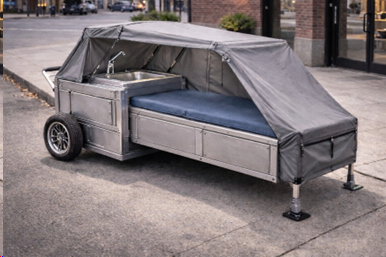
The Mobile Cart Support Unit + Hygiene gives you a better answer: a private shelter the city owns — one that has a twin size bed, toilet, sink, running water, dining table and it locks, — plus it goes where the person goes.

Since Grants Pass v. Johnson · U.S. Supreme Court · 2024 the only solution was the sweep. Now you've got another solution to offer.

Who above you is going to wish they'd seen this before they got asked?

First working unit ready by end of July.  See the unit for yourself  Demos start in August — in person or by video.
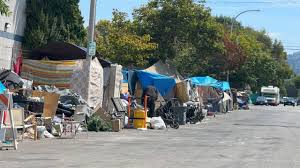
Homeless encampment with tents and debris on a city street

What people see on the way to work, the store, school, or church. No wonder they ask what the city is doing.

The one idea

Everything tried before this was about a place. This one's about the person.

A place can't follow a person. When a program closes — or a sweep clears the block anyway — the place stays put and the person starts over from nothing. This flips it. The shelter, the lock, the papers, the case file — they all move with the person. Nothing's left behind for the next sweep to clear.

The unit · patent pending

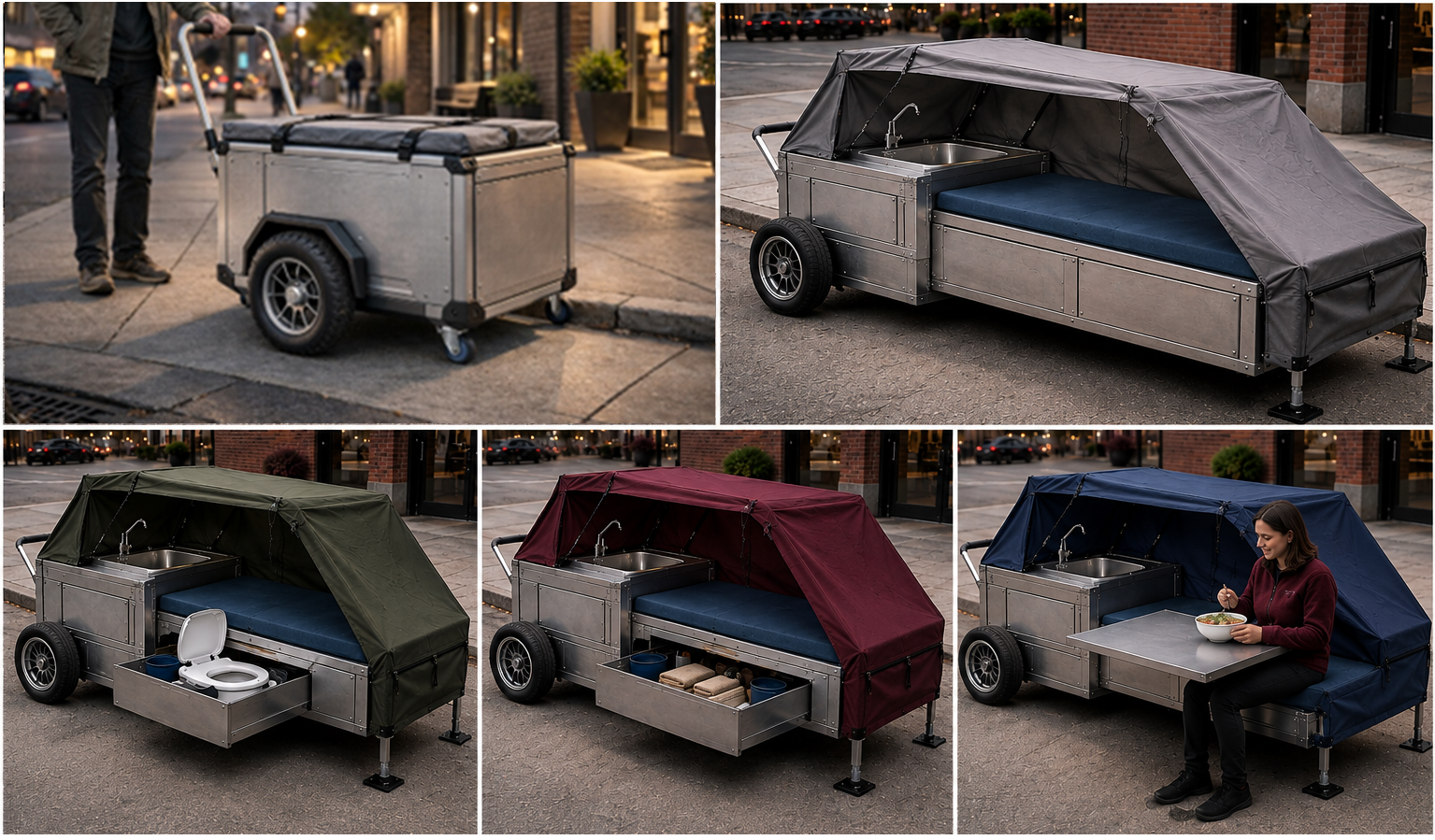
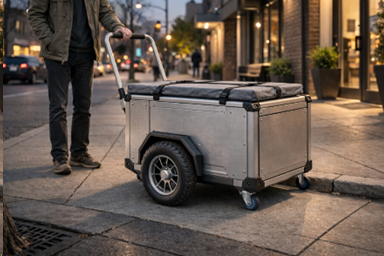
A bed, a toilet, a sink, and a lock — that fold down to the size of a cart.

Folded up, it's about the size of a Costco cart. One person can open it into a closed, private shelter in under two minutes. Everything that matters locks inside.

MCSU+H closed and ready for transport
Closed — ready to move42″ × 34″ × 30″ · fits any sidewalk or doorway
MCSU+H deployed with canopy, bed and sink
Open — shelter up73″ · canopy · bed · sink · under 2 min
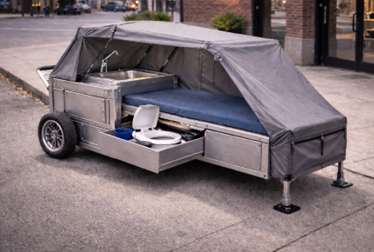
MCSU+H sanitation drawer open showing cassette toilet
Toilet drawercassette toilet · full 34″ width · the city empties it
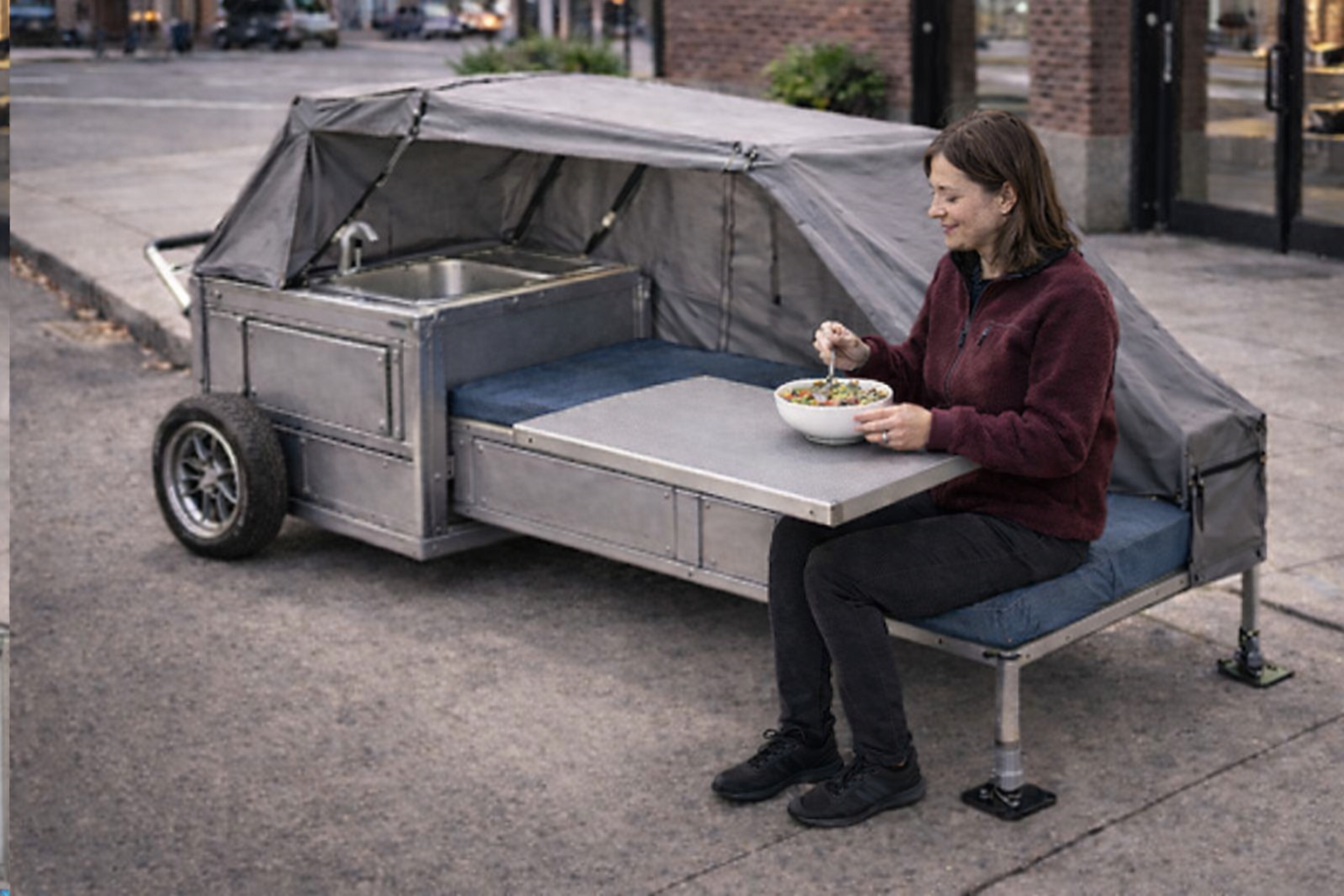
A person seated at the fold-down interior table inside the unit
A place to sitfold-down table · a place to eat
Bed73″ open — about twin length
Toiletbuilt in, emptied by the city
Sinkbuilt in, with running water
LockID, meds, papers — locked away

Patent Pending No. 63/987,871 · Mitchell-Lambdin Foundation LLC · No site. No permit. No crew. No truck. One person, one unit, two minutes.

Who it reaches

The people already in your system — the ones a sweep sends back to the start.

It's built for people who are unhoused for now, not for good: they have a caseworker, an ID, an appointment to keep, and a real shot at housing. Give them a dry place to sleep and a locked place to keep their papers, and the services you already run can keep moving them forward. Sweep it away, and the paperwork that took months to gather ends up in a landfill.

  • ProtectsPapers, medications, the case file, and the bond with the outreach worker — the first things a sweep destroys.
  • EnablesAppointments kept. A fixed place where outreach can find the same person next week. An ID that's still there for every way off the street.
  • TrackingOptional, and off unless the city turns it on. If they do, they track their own equipment the way they track any city vehicle — the city controls it, and it's never required of the person using the unit.
Why everything before it didn't work

Three things your city has probably already tried. Real numbers, real results.

These aren't failure stories. They're the honest record of good programs that all hit the same wall: they were built around a place, and the person walked away from it.

Tried · sanctioned camps

Fenced, staffed, serviced lots

$24K–$61Kper person, per year
SF safe-sleeping village$61K
Portland estimate$34K
Boulder city staff est.$24K

The wall: the place stays put; the person doesn't. When a fire, a lawsuit, or the neighbors shut it down, everyone scatters and every case starts over. Reason 2024 · Boulder Beat 2023

Tried · tiny-home villages

64-sq-ft units, shared baths

$42,344avg. build cost per bed, LA
Operating, per bed/yr$20,075
LA interim housing, FY22-23$163M
Newsom's 1,200 promised1 site built

The wall: land, permits, neighbor sign-off, utilities, staff, an operator under contract. The program was never the problem. Everything it took to build was. A-Mark 2023 · LAHSA

Tried · navigation centers

Big group intake centers

$16,654annual cost per congregate bed
LA Inside Safe, per person$111,000
ABQ Gateway spend$121M+
ABQ unsheltered count+40%

The wall: the priciest of the three and the hardest to grow — and the audit numbers are brutal. HUD AHAR 2023 · NBC LA

3

Of 2,308 people swept and sent to navigation services in the 2024 NYC Comptroller audit, three got housing. Three. The system isn't broken because the programs are bad. It's broken because nothing keeps a person in it between the steps.

The difference, in one line

Same goal. Opposite design.

Everything tried before

  • Needs a fixed site, permits, and neighbors on board
  • Needs power and water hooked up, plus round-the-clock staff
  • Built around the place, not the person
  • Starts over when the site closes or the sweep comes
  • Carries a running contract that never ends
  • Takes months or years to open

MCSU+H

  • No fixed site, no permits, no neighbors to win over
  • No power or water to hook up, no new operator
  • Built around the person — goes where they go
  • Comes through the sweep intact; nothing starts over
  • No new land to lease, no yearly contract
  • Owned outright by the city

Toilet swaps and outreach fold into routes your crews already run — no new yearly line item. And unlike a vendor's pitch, that's a real zero, not a promised one.

Where it fits — whatever your city is doing

Whatever path you're on, the sweep keeps breaking it.

Housing, treatment, outreach, work rules — every one of them depends on the same thing: keeping a person reachable, with their ID and their medications intact, long enough for the next step to happen. This doesn't compete with any of them. It's the steady ground under all of them, and it holds whether your city is building housing or requiring treatment.

A sweep between the voucher and the signed lease wrecks the ID, closes the case, and lets the voucher expire. Same story between an intake and a treatment slot, or an assessment and a bed. The person lands back at the start of something that took months or years to reach. This doesn't change the system. It keeps people in it — long enough to reach the next step. Losing papers alone adds three to six months to any of these paths.
Why the sweep keeps losing

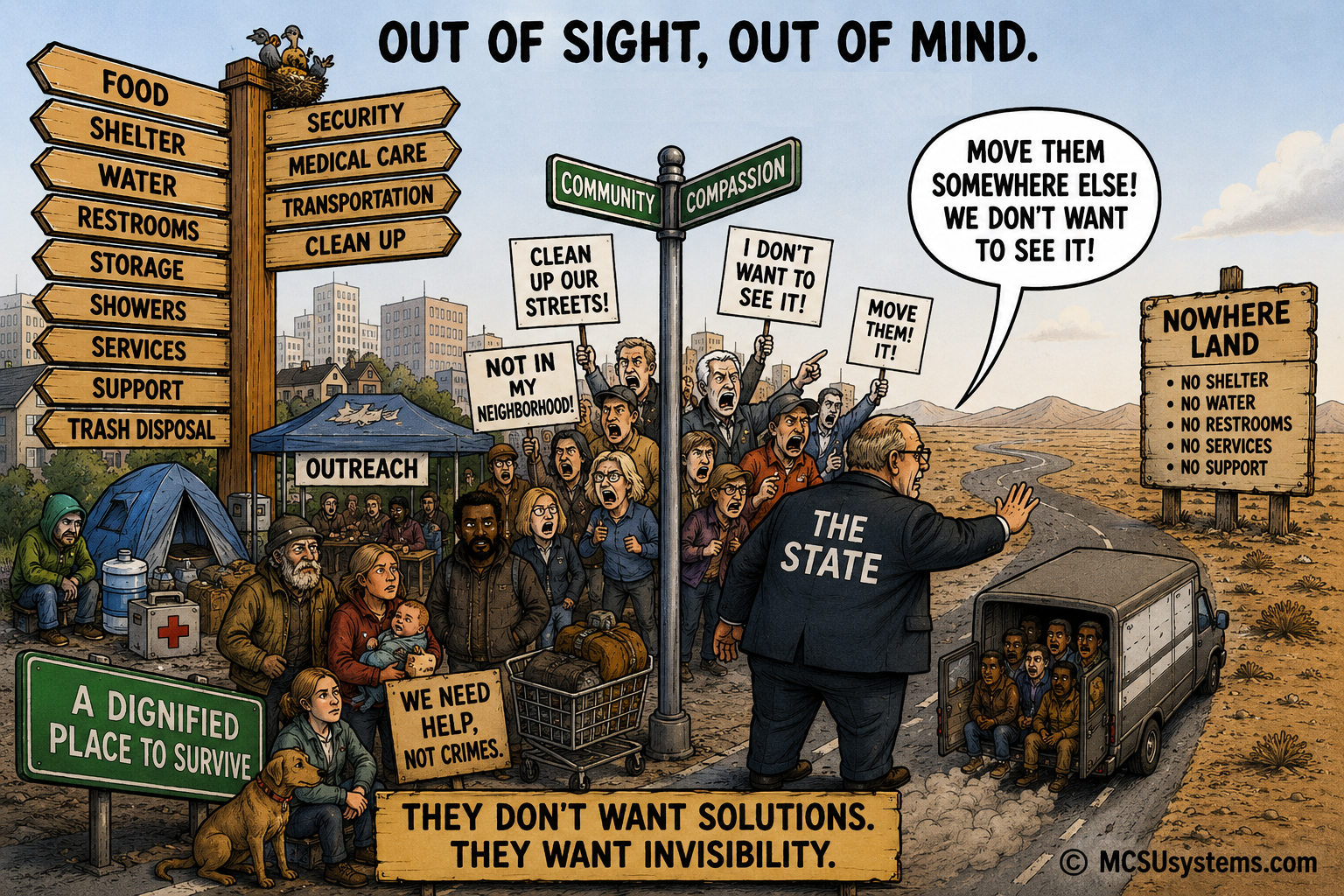
Sweeps aren't what cities want. They're what cities reach for to make the pressure stop.

No one in city hall thinks a sweep ends homelessness. It's the one move that answers the pressure — and the pressure comes from every direction at once, all of it demanding the same thing: make it go away.

Business owners

Losing customers to the camp on their block. Organized, loud, and relentless.

Residents

Calling council offices about needles, noise, and safety. Enough calls and the office demands action.

Parents near schools

Any risk to kids escalates fast — far more pressure than the size of the camp would suggest.

Press

One local story about a visible camp can trigger a sweep within days.

Planned events

Conventions, championships, official visits — the block has to be clear weeks ahead.

Public health

Hepatitis A, TB, human waste — emergency sweeps ordered to stop the spread.

Every one of those gets the same response, because it's the only one on the shelf: clear the camp. Same crew, same equipment, same hazmat cleanup, same lawsuit risk — and the same camp forms again three blocks over within days. The sweep moved the people. It didn't house them.

The RAND Corporation looked at three big Los Angeles camp clearings and found zero drop in the city's homeless count. Not a smaller problem somewhere else — the same problem, a few blocks away.

The sweep was never going to work. It has no destination.

You can move someone off a block a hundred times. With nowhere to move them to, they're on the next block, and the cost just runs again. The MCSU+H is the destination the sweep never had.

How many more times do you and your boss want to clear the same block and expect different results?

Send it up →
Grants Pass v. Johnson · U.S. Supreme Court · 2024

Until 2024, you couldn't sweep without a bed available. The Court took that requirement away — and the destructive sweep became the default answer to homelessness.

Now a city can clear a camp with no bed, no notice, and nothing else offered — and owe nothing for it. The one rule that ever forced a humane step first is gone, and what keeps running on repeat is the cheapest, most destructive answer, because nothing requires anything better.

So be clear about what that changes for you: nothing legal. This isn't a shield against a lawsuit — there's no lawsuit to shield against.

It's for the city that decides, on its own, to do more than the law now requires — and wants more than a press release to point to when it does. The press, the public, advocates, and voters are all watching what comes next. Fifty units in place before the next sweep is something they can see. That's the whole argument: not protection, posture. The humane choice, made visible.

The law lets your city do nothing. Shouldn't the person who makes that call know there's another way?

Send it up →
The pilot · 50 units · one zone · 90 days

It doesn't add to your budget. It subtracts from it.

Fifty units in one managed zone for ninety days. Every line below is something your city already pays for. Inside the zone, for those ninety days, each one drops to zero — or close to it.

→ zero · sweeps

No sweeps in the zone

Crew labor, hazmat cleanup, police presence, press, lawsuit risk — all paused here for the run.

→ zero · waste

No human waste on these blocks

The city empties the cassette toilets. The crews scraping pavement at this address don't have to make the stop.

→ zero · replacement

No replacing lost papers for these 50

Locked storage means IDs, records, and applications survive. Social services stops paying $200–$2,000 per person to redo them.

→ zero · search

No hunting block to block

Workers go to one spot and find the same fifty people each week. The outreach budget you have goes further, with no new hire.

→ down · calls

Fewer minor police calls

Welfare checks and disturbance calls drop when people are in a registered, managed place. Dispatch can turn to real emergencies.

→ changed · the question

"What is the city doing about this?"

The camp isn't there anymore, and the answer is right there on the sidewalk. So is whatever people ask next.

To head off the obvious question: fifty units in one zone is not a sanctioned camp. There's no land to lease, no fence, nothing permanent built. Each unit is a city-owned asset assigned to one person — it locks, it moves, it can be reassigned. Close the zone and the units roll to the next one. Nothing starts over, because the shelter belongs to the person, not the ground.

How to measure it: pull your zone's last 90-day costs for those six items, run the pilot, compare. The pilot makes its own case from your own numbers.

You're not the one who runs these numbers — but you know who is. Have they seen this yet?

Send it up →
For your team

The decision is yours. These are the answers for the people who'll push back on it.

Forward the right card to the right desk. Each one answers the objection that office will raise.

Hand to · the city attorney

It's posture, not protection — and we say so

Grants Pass requires nothing, so we claim no legal shield. What this gives you is a public position you can defend when a sweep happens: proof the city chose the humane option. No oversold liability claim for your attorney to pick apart.

Hand to · the budget officer

A one-time purchase, not a yearly contract

No land lease, no operator contract, no new yearly line item. The ongoing toilet service and outreach fold into routes you already run. A small pilot fits the kind of spending you can approve without a council vote. And because it's a one-time piece of equipment, not a housing program, you can fund a pilot outside the HUD Continuum-of-Care stream entirely — no matter how the federal housing-versus-treatment fight finally lands.

Hand to · public health

A toilet that moves with the person

San Diego's 2017 hepatitis A outbreak infected 500+ and killed 20 — human waste on streets with no restrooms at night. The built-in cassette toilet takes that risk off the table for the people in the units. You can buy it as sanitation equipment, separate from HUD.

Where it stands · summer 2026

Design done. Being built now. Demos this August.

Done

Engineering

Final design drawings finished, patent pending.

End of July 2026

Prototype delivered

The first working unit comes off the line.

August 2026

Demos begin

In-office and live video demos open. Cities that reserve now go first.

After the demo

Letter of interest

Only if it's worth pursuing — non-binding, no budget, no procurement.

If you're the one who gets asked

Someone has probably already asked you what your city or your boss is doing about the camps.

Maybe it was a council member in the hall. Maybe a reporter, or a neighbor at an event. However it came, "we cleared the camp" isn't much of an answer — everybody knows the camp comes right back in a few days.

You can't fix homelessness, but there's one small thing you can do to actually help, pass this along.

Do you want your council member or city manager to have a real answer — before the next time someone asks them for one?

Here's a few sentences you can copy and paste into an email. You don't have to write a thing:

This might help with the camps we keep clearing. It's a shelter unit the city would own — built on a cart, with a lock, a toilet, and a bed, and it folds up small. There's a free 20-minute demo in August. No cost, no commitment. Worth a look? mcsusystems.com

Want to look it over yourself first? Watch the 20-minute demo — you don't need anyone's okay. See it here.

Two ways to see it

Reserve twenty minutes with the working unit.

Demos begin in August, when the prototype is finished. Reserve now and your city goes first on the schedule. No commitment, no letter required, no procurement — just a look at whether this fits your community.

In person

The prototype, set up in your office

Push the cart, open the bed and canopy, pull out the toilet drawer, wash your hands. The whole thing, in the room, with the founder.

Reserve an in-office demo →
By video

Filmed setup, live Q&A

Professionally filmed footage of the working unit, walked through live, with your questions answered as you go. About twenty minutes. No travel.

Reserve a video briefing →

Or put your city on record now — download the one-page letter of interest →

About

Who's behind it.

The MCSU+H was invented by Tom Mitchell, a 75-year-old writer who lives and travels full-time by RV, and named for him and his partner, Robin Lambdin, a retired nurse. His eye, her heart.

It started with Robin. In every city we passed through, she'd ask me to drive her through the parts of town where homeless people gathered, and she'd hand things out the window — socks, blankets, shoes, the silver space blankets that crinkle in the cold. We had one rule: anyone who asked for money got five dollars, no questions. I drove. She gave. And without my noticing, her eyes became my eyes.

I assumed someone had a plan. I was wrong. In 2025 I tried to build one — a nonprofit, a handshake deal with a container-home company, calls to the State of New Mexico about unused land, outreach to local homeless-services managers. I got zero responses. Not one call back. The system wasn't ignoring the problem. It had no way to handle what I was proposing.

Months later I was driving through Albuquerque and finally saw them — not one or two, but everywhere: people pushing shopping carts piled with everything they owned. They'd always been there. I just hadn't seen them. That same day I walked into a chain grocery store with an empty cart corral and asked what happened. "Stolen," they said. "All of them." The next day the police had parked a blue-light surveillance camera in that lot — to catch people taking carts.

The carts weren't being stolen. They were being lived in. They were the only mobile shelter some people had — and the official answer to that was a camera. Not a bed. Not a toilet. A camera. So I asked the only question that mattered: what if the cart were actually built for this — with a lock, a toilet, a sink, and a place to keep the papers a sweep would otherwise throw in a landfill?

That question became the MCSU+H.

— Tom Mitchell, founder · Mitchell-Lambdin Foundation LLC · Patent Pending No. 63/987,871